
7 Reasons a Flores Overland Journey Deserves a Place on Your Indonesia Bucket List
Flores offers a compelling alternative to Indonesia’s better-known destinations, where familiar beach resorts and busy visitor hubs can shape the experience. On this eastern Indonesian island, travel often unfolds along quieter roads linking small settlements, coastal communities and upland villages. The scenery changes steadily: green hills give way to rugged mountains, dry savannah, forested slopes and bays edged with clear water. Rather than arriving by air and remaining in one enclave, an overland route reveals how varied Flores is from one region to the next. The island’s appeal lies not only in headline sights, but in the spaces between them.
Driving across Flores creates opportunities to see daily life beyond resort areas and curated excursions. Routes pass through markets opening at dawn, roadside food stalls, schoolchildren walking home, and farmers tending fields. In a village stop, travelers may encounter local crafts, hear regional languages and learn how customs differ across the island. Such moments are most meaningful when approached with patience and respect: ask before taking photographs, follow local guidance, dress appropriately and choose community-based services where available. A brief conversation or shared meal cannot represent every community, but it can make a journey feel grounded in the lives unfolding there.
An overland itinerary also encourages a slower rhythm. Distances can take longer than a map suggests, and weather, road conditions or an unplanned stop may reshape the day. Rather than treating these pauses as obstacles, travelers can use them to notice the landscape, rest at a roadside café or watch the light shift over the sea. Moving gradually between places gives context to each destination: a mountain pass, fishing harbor or village becomes part of a connected experience, not simply a photo stop. On Flores, the journey itself is a reward, revealing an Indonesia defined by everyday encounters as much as scenery.
A Flores overland journey offers a changing panorama that makes the island feel far larger than its map suggests. The route may begin among dramatic volcanic peaks, where morning light catches rugged ridges and clouds gather around the summits. Farther along, forested slopes descend toward valleys, with roadside villages and patches of cultivated land adding detail to the green landscape. Each bend can reveal a different frame: a mountain wall, a distant crater, or a narrow ribbon of road threading through the hills. Rather than one continuous vista, the drive unfolds as a sequence of surprises that invite travelers to pause.
As the road climbs and drops, elevations shift quickly, and so do the views. Winding mountain passes can open onto broad panoramas before dipping into shaded bends where the slopes feel close and intimate. On the island’s southern and western stretches, the scenery may soften into coastal roads, bright bays, and deep blue water. Terraced farmland appears in places, its carefully shaped contours tracing hillsides and changing color with the season. These transitions make even a distance feel like several journeys joined together, each with its own atmosphere, light, and sense of scale. Travelers who leave room in the schedule can enjoy scenery without treating every stop as a destination.
Scenic pauses are part of the experience: a roadside viewpoint might frame a bay, while a pullout can offer time to watch clouds move over a volcanic ridge. Stopping for a drink, photographs, or a walk turns the drive into unhurried exploration rather than a transfer between places. Distances on a map can be misleading. Road conditions vary, and narrow, winding sections, steep climbs, or slower traffic may extend travel times. Planning flexible days and checking advice helps keep expectations realistic. With patience, longer stretches become part of the pleasure, allowing the island’s scenery to unfold at its own pace.
A Flores overland journey offers opportunities to encounter the island’s many communities, customs, and artistic traditions along the way. Cultural life varies from one area to another, shaped by local histories, languages, beliefs, and relationships with the land. Traveling between towns and villages can reveal this diversity more clearly than treating Flores as a single, uniform destination. A knowledgeable local guide can explain what visitors are seeing, introduce appropriate ways to participate, and provide context that may not be apparent from a brief stop. These encounters are most meaningful when they are approached as opportunities to learn, rather than as performances arranged for visitors.
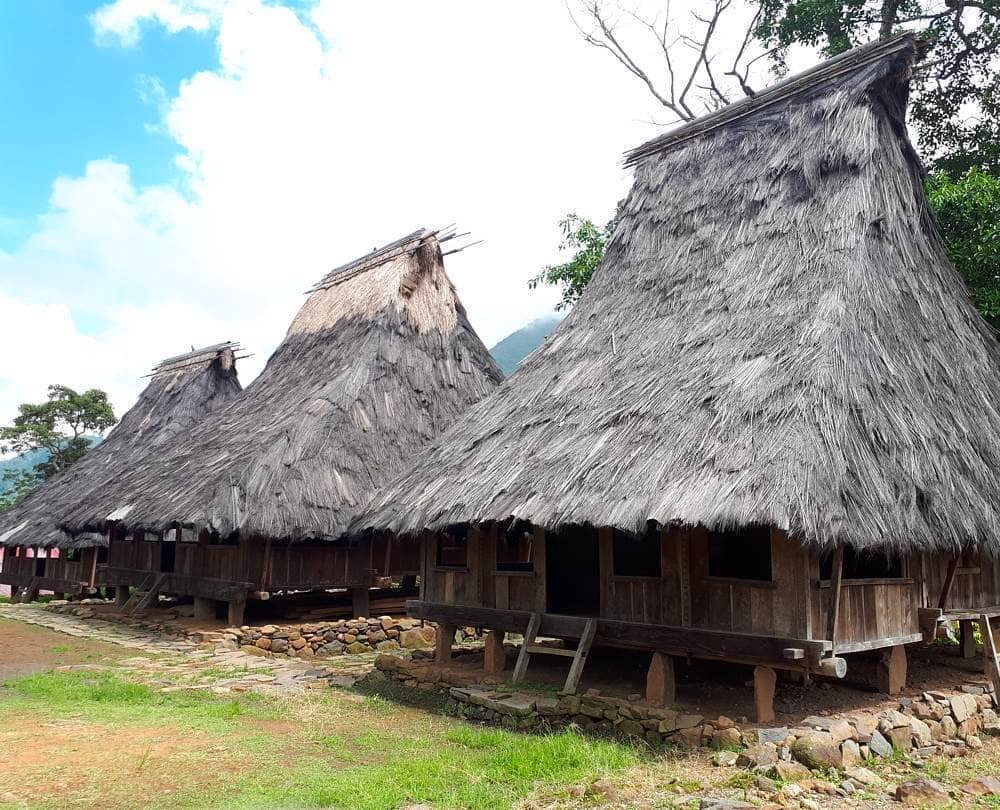
Traditional villages can offer insight into architecture, community life, and customs that continue to change over time. With local guidance, visitors may learn how particular spaces are used, which practices are important to residents, and whether a visit is suitable on a given day. In some areas, travelers can also see ikat weaving, a skilled textile tradition involving the careful tying and dyeing of threads before they are woven. Artisans may explain the designs, techniques, and time involved in their work. Buying directly from makers, when appropriate, can provide practical support, while a conversation should never be assumed or demanded simply because someone is working.
Respectful visits depend on paying attention and following local guidance. Ask permission before photographing people, homes, textiles, or ceremonies, and accept a refusal without argument. Some events are private or sacred, and photography may be inappropriate even when others are taking pictures. Dress and behave in ways recommended by hosts, and avoid entering restricted areas. Communities are living places where people work, study, worship, and maintain relationships—not attractions staged for an itinerary. Taking time to listen, asking thoughtful questions, and recognizing that customs differ across Flores helps make cultural encounters more considerate. This approach can leave travelers with a deeper understanding of the island, as well as a more responsible connection to the people who call it home.
Flores is more than a route between famous islands: its volcanic interior and coastal settlements make the journey itself a major part of the experience. A drive across the island reveals changing elevations, cultivated valleys, forested slopes, and broad views that are difficult to capture on a short visit. These landscapes reflect Flores’s active geological history, while villages and local markets offer a chance to encounter everyday life along the way. For travelers building a wider Indonesia itinerary, an overland journey can add a distinctly different perspective, balancing time on the water with highland scenery and road travel through the island’s varied regions.
Kelimutu is one of the clearest examples of Flores’s volcanic character. Near the highland town of Moni, a trail leads to a viewpoint above three crater lakes set among cool mountain scenery. Their colors can be striking, but they are not fixed: conditions and mineral changes can cause the lakes’ appearance to vary over time. This natural uncertainty is part of the appeal, and the setting remains compelling whether the water looks vividly colored or more subdued. Sunrise visits are popular, so travelers should plan for an early start and check local conditions before setting out.
An overland itinerary can link inland highlights such as Kelimutu with coastal gateways, including Labuan Bajo in the west. From there, some travelers continue toward Komodo National Park, extending a land journey into an island and marine adventure. That connection can make Flores a useful centerpiece for a broader trip, but the two experiences require separate planning. Boat excursions depend on transport schedules, sea and weather conditions, and applicable permits or park arrangements; availability may change, so confirm details with operators before making firm plans. Allowing flexibility between road transfers and boat departures helps keep the itinerary practical, while preserving time to appreciate both Flores’s volcanic landscapes and its coastal setting.