
Across Flores by Road: A Journey to Wae Rebo, Bena, and Kelimutu
Flores rewards travelers who cross it overland, but its dramatic terrain makes the journey more demanding than a map may suggest. Roads wind through mountains and coastal valleys, and changing weather, roadworks, or slow-moving traffic can add hours to a drive. A practical west-to-east route begins in Labuan Bajo, continues to the trailhead for Wae Rebo, then heads east toward Bajawa and the traditional village of Bena, before ending near Moni for a visit to Kelimutu. The itinerary can also be followed in reverse, depending on flight schedules and preferred starting point.
Allow several days for this route rather than attempting to cover the island in one long drive. A private vehicle with a hired driver offers flexibility for stops and helps simplify navigation on unfamiliar roads. Travelers seeking greater independence can arrange a private vehicle, while local buses provide a lower-cost option for those with more time and patience; services may be infrequent, and connections can require extra planning. Distances between destinations can be substantial, so confirm realistic journey times locally and avoid scheduling tightly timed activities immediately after a long transfer.
Before setting out, check current road conditions and weather with accommodation providers or local drivers, and carry cash for meals, fuel, and places where card payments are unavailable. Pack layers for cool highland mornings, along with rain protection and sturdy footwear. In smaller towns, accommodation choices may be limited, so booking ahead is sensible, particularly during busy periods. Keep some flexibility in the schedule for delays, and share your route with your driver or travel companions. Comfort levels vary, and journeys may involve basic facilities and extended hours on the road. Treating the drive itself as part of the experience—taking breaks to enjoy the scenery and local stops—makes the route more rewarding and leaves room for the unexpected.
Leaving Labuan Bajo, the journey toward Wae Rebo follows the roads of western Flores through changing landscapes and small settlements, eventually reaching Denge, the village that serves as the usual starting point for the final approach. From there, visitors continue on foot into forested mountain country. The trail climbs steadily, and sections can become muddy, uneven, or slippery, particularly after rain. How long and demanding the hike feels depends on a visitor’s fitness, pace, weather conditions, and the route advice of local guides. Allow time for breaks, carry water, and follow guidance on the trail rather than treating the walk as a simple transfer.
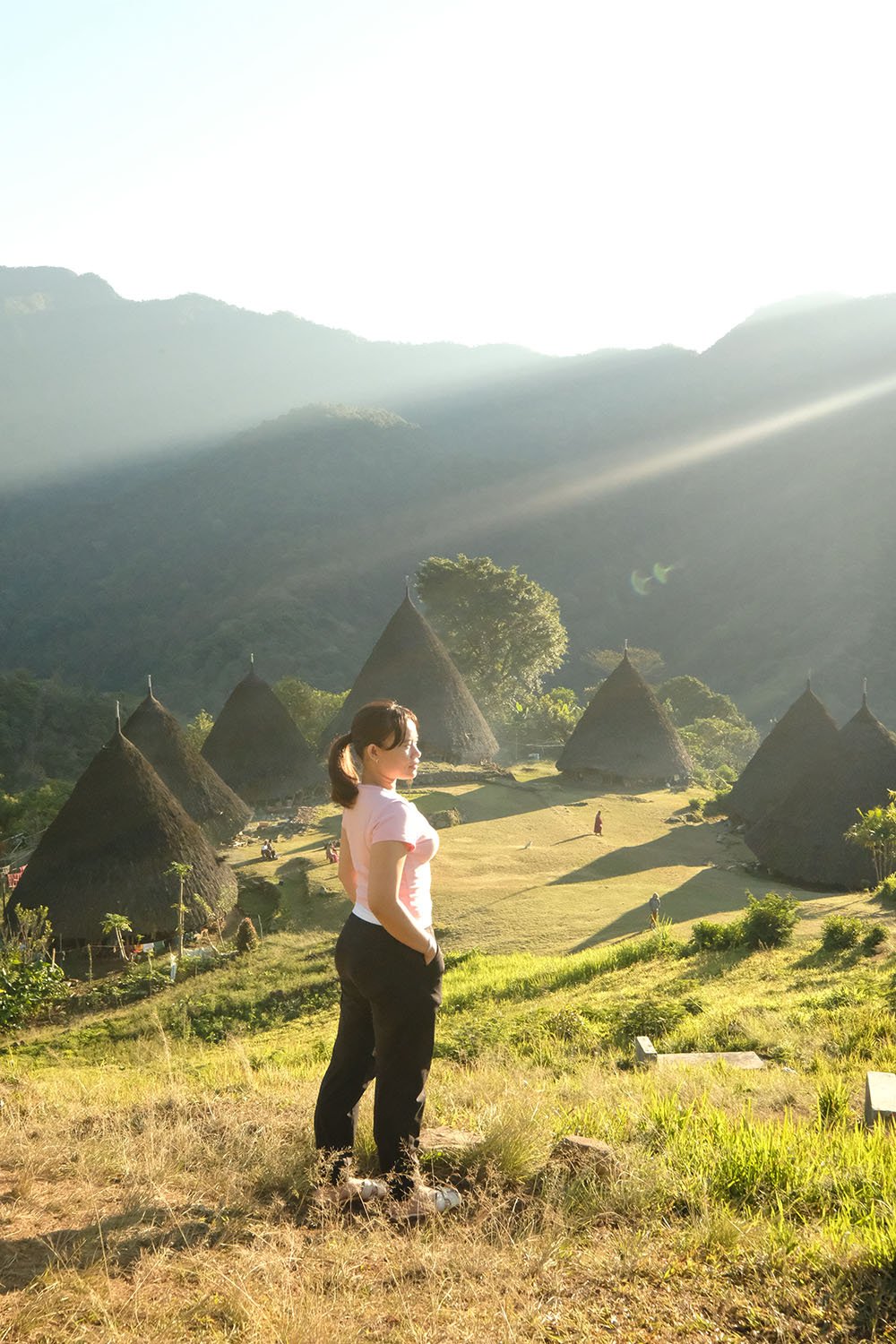
Wae Rebo appears among the mountains as a compact settlement of distinctive, cone-shaped traditional houses, surrounded by forest and open highland views. On arrival, guests are generally received through a formal welcome that introduces them to village customs and the expectations of a visit. The experience is shaped by the community, so visitors should listen carefully, follow local direction, and ask permission before taking photographs, especially of residents or inside homes. Modest, considerate clothing is appropriate. These are not decorative buildings arranged for visitors; Wae Rebo is a lived-in home, and daily life continues while guests are present. Approaching with patience and respect helps keep the visit comfortable for both hosts and travelers.
Some visitors choose to stay overnight, sharing communal meals and experiencing the quiet mountain setting after day visitors have left. Accommodation and facilities are simple, and travelers should be prepared to adapt to basic arrangements rather than expect hotel comforts. A stay does not guarantee a particular ceremony, performance, or personal encounter; the atmosphere varies with village routines and circumstances. For either a day visit or an overnight, bring only essentials on the trek, such as water, weather protection, and necessary personal items, and arrange luggage storage or transport beforehand where possible. A light pack makes the uphill walk easier and leaves more room to focus on the path, the landscape, and the privilege of being welcomed into a community’s home.
Near Bajawa, Bena is a traditional Ngada village set on a hillside in Flores’ central highlands. Its rows of homes follow the slope, creating an ordered settlement overlooking green valleys and volcanic ridges. In the central village space, ancestral shrines and stone structures form a cultural focus. Their arrangement reflects relationships between families, ancestors, and community life, rather than serving merely as decoration. Details in the roofs, carved elements, and placement of stones reward unhurried attention. Bena offers a perspective distinct from Wae Rebo: both communities preserve strong local identities, but their settings, building forms, and village layouts differ. Visiting both makes a road journey across Flores an encounter with varied highland heritage, not simply a checklist of scenic stops.
Allow time to walk slowly through Bena, notice how paths connect the homes and shared spaces, and listen to local explanations where interpretation or a guide is available. A little context can clarify the meaning of structures and customs that may not be apparent at first glance. Treat the visit as time in a living community, not a quick photo stop. Ask permission before taking close-up photographs of residents, homes, or culturally significant objects, and avoid interrupting ceremonies. Be considerate of privacy, keep to appropriate paths, and follow any guidance from residents. Where possible, support the community through suitable local purchases or an agreed guide arrangement; ask about expectations rather than assuming that every space or activity is open to visitors.
Bajawa is a practical overnight base for this part of the route, giving travelers a chance to rest, eat, and prepare for the next drive. Staying nearby can also make it easier to visit Bena without rushing, while leaving time for changing road conditions and other planned stops. Depending on your schedule, weather, and local access, highland scenery or nearby hot springs may offer an optional addition. They need not be part of every itinerary: prioritize safe travel and the time required to experience the village respectfully. An overnight in Bajawa provides a useful pause between remote Wae Rebo and the onward journey, while connecting visitors with Ngada heritage in a different landscape and at a more accessible pace.
Kelimutu National Park provides an impressive eastern highlight on a Flores road journey. Near its summit, three volcanic crater lakes sit within neighboring basins, each known for colors that may appear turquoise, green, brown, or nearly black. Their hues can change over time as geological activity and environmental conditions alter the water’s chemistry and composition. The lakes are striking, but their colors are not fixed, and a visit may reveal shades different from photographs or earlier reports. From the village of Moni, travelers usually continue by road toward the park entrance and walk the final section to designated viewpoints.
Many visitors set out well before dawn to reach the overlooks around sunrise, when the changing light can make the landscape especially memorable. An early start does not guarantee a clear view: clouds, mist, rain, and other weather conditions can obscure the lakes or limit visibility. Bring warm layers for the cool summit air and sturdy footwear suitable for uneven paths and steps. Confirm park entry arrangements, opening information, fees, and current access conditions before departure, since local rules and road or trail conditions can change. Allow enough time for the journey from Moni and avoid treating sunrise as a certainty around which every other plan must depend.
Together, Wae Rebo, Bena, and Kelimutu reveal distinct dimensions of Flores: a mountain community, Ngada cultural heritage, and a dramatic volcanic landscape. Linking them by road can be rewarding, but distances, winding routes, and changing conditions make an overpacked schedule difficult. Build in recovery time after long drives and realistic buffers for road delays, especially when connecting remote destinations. Travel with respect for residents, local customs, and protected areas; follow park guidance and leave natural sites undisturbed. At the same time, keep some flexibility in the itinerary. Scenic viewpoints, village visits, and roadside encounters may invite an unplanned pause, and leaving room for such stops can make the journey feel less like a checklist and more like a considered exploration of Flores.